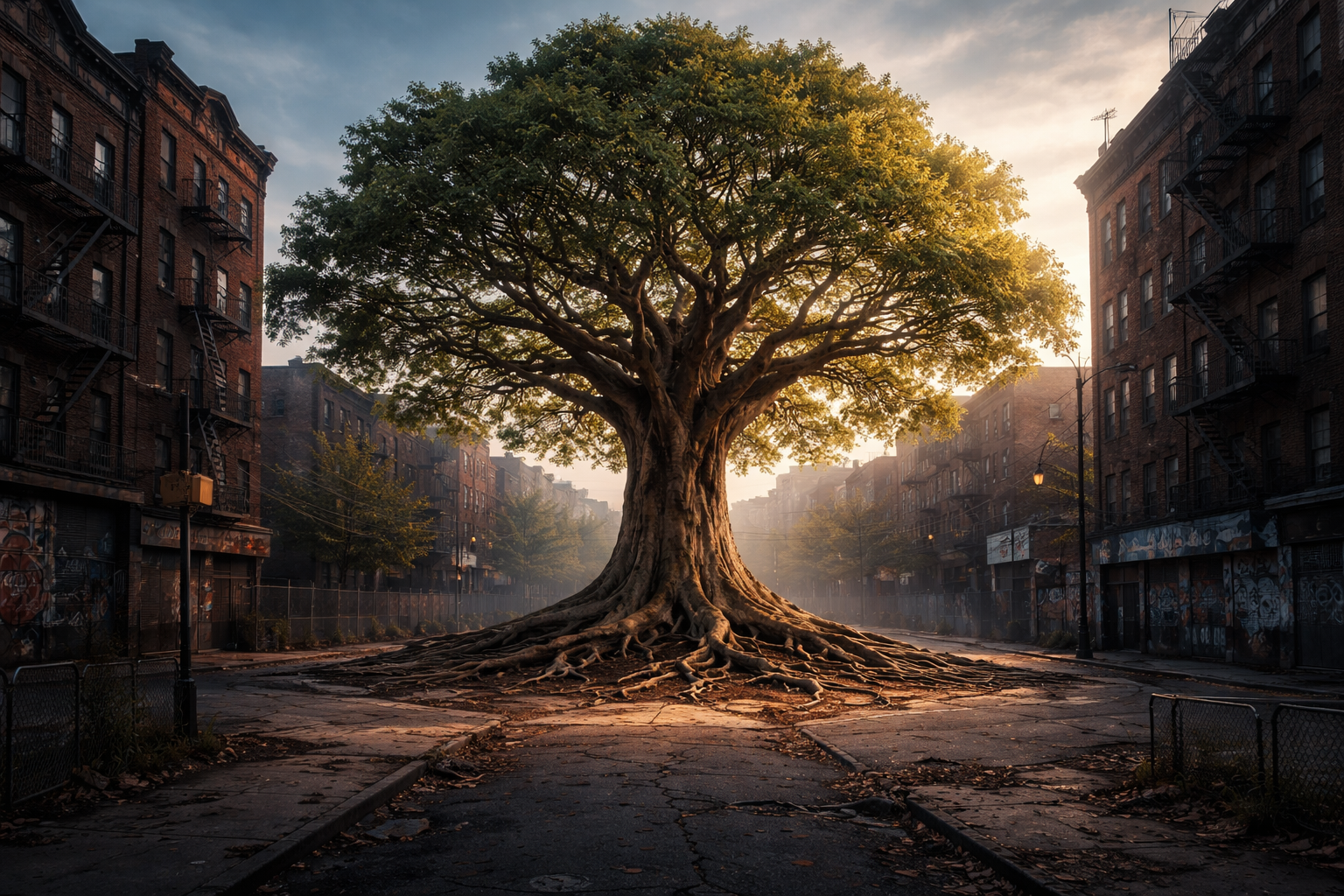
Phys. Ed.
HipHop has always been physical, even when people only focus on the sound. It lives in breath control, in stage presence, in long nights, in movement, in discipline, in how you carry yourself when nobody’s watching. Phys Ed exists to bring that full picture back into focus. This isn’t just about fitness. It’s about function.
An eMCee needs lungs. A breaker needs balance. A DeeJay needs stamina. A writer needs clarity. Every element of the Kulture demands something from the body and the mind, whether it’s acknowledged or not. Phys Ed is where those demands get respected instead of ignored. You simply don’t build something lasting on a weak foundation.
The body is the first instrument. Before the mic, before the turntables, before the canvas, there’s you. How you move, how you recover, how you fuel yourself, all of it shows up in your work. Energy isn’t random. It’s built. This section is built around that awareness.
Sports and fitness sharpen discipline. Training teaches consistency, patience, and the ability to push past limits when it would be easier to stop. That same mindset translates directly into the Kulture. The grind isn’t just metaphor, it’s practice.
What you put into your body matters. Diet isn’t separate from performance. It affects focus, stamina, mood, and recovery. Whether you’re on stage, in the studio, or just trying to think clearly, what you eat plays a role. Phys Ed looks at nutrition as fuel, not restriction. It’s about understanding what supports you and what slows you down.
Then there’s the mind. Mental health isn’t an add-on, it’s central. HipHop has always been a space where people process reality out loud, but that doesn’t mean the weight disappears. Stress, pressure, expectation, isolation, all of it exists behind the scenes. Taking care of the mind is part of staying sharp, part of staying present, part of staying in control of your own narrative. All of it connects.
Body, mind, and spirit don’t operate separately. When one is off, it shows up everywhere else. When they’re aligned, everything moves cleaner. You think clearer, perform better, recover faster, and stay grounded through the highs and lows. This section exists to document, study, and apply that balance.
From training routines to nutritional awareness, from mental discipline to overall wellness, this is where the Kulture looks inward and strengthens itself from the inside out.
Because longevity in HipHop isn’t just about talent. It’s about how well you take care of the vessel carrying it.
The Counterbalance is the official blog of Words Beats & Life Inc., a nonprofit organization based in Washington D.C. This site is a platform for our global extended family to bring lite to politics and culture beyond the work done by our organization each day.
We are unapologetic advocates for the transformative power of HipHop Kulture in all its forms, empowering artists to relentlessly create and refine systems that demonstrate positive change through our individual and collective brilliance. We create arts based educational experiences that equip youth, arts managers, teaching artists and scholars to move from theory to practice.
KNOWLEDGE:
Seek knowledge through research, personal experience and professional instruction. Avoid scams, fads, hypes, hustles, and injuries, by doing your homework. RBG FitClub is a Lifestyle, not a dogma. There are many roads on the Path, but if you don’t know where you want to go, then how will you hope to ever arrive? Strength, Endurance and Flexibility are the Holy Trinity of most comprehensive programs. As long as you are developing safely in these areas , you are on a good path.
NUTRITION:
Practice discipline and feed your self a balance of what your body needs to thrive. Drink plenty of fresh water and avoid sugary artificial drinks. Eat mostly live, whole foods like fruits, vegetables, nuts (if you are not allergic). Eat other foods sparingly. Conquer all food and substance addictions. Learn to cook and make your favorite dishes with only healthy ingredients.
REST:
The average person needs about 7 hrs of sleep per night to function at optimal levels. Some a little more, some a little less depending on the activities in your life.. Rest is necessary for your internal systems to replenish and rejuvenate. Working out stresses the muscles but they only grow when we rest, not when we work out. Yin and Yang is the Law of duality present in all things. We must rest in order to rise. Be smart. Get your Z’s, take breaks, relax, so that you keep the cycle of energy flowing and don’t burn out from over training.
GOAL CENTERED EXERCISE:
A good and obvious way to stay motivated is to have SPECIFIC goals. Keep track of your progress by having a daily-weekly journal. This will keep the facts of your progress clear and help you identify strengths and areas to focus on to reach even more goals. You don’t have to have gigantic muscles to be fit nor be frail and thin. You can take boxing if you want an aggressive work out or Tai Chi if you want a more relaxing program. Yoga is great for flexibility and relaxation. There are so many ways. The key is be specific about what you want to get out of your health and fitness lifestyle. As the saying goes, if we fail to plan, we plan to fail.
CONSISTENCY:
Staying on your training is the most important key to your success because if you quit, you cant be successful. Understanding why we so often fail at staying on our discipline is why these 5 principles exist. When you have the right and correct information (Knowledge), the right diet to supply energy and support your growth and development (Nutrition), the right plan to reach your specific goals (Goal centered Exercise) and the right amount of chill time (Rest) you have the atmosphere for you to stay consist. Breaks are a part of the cycle so don’t give up if u need to, take a break. But put a time frame on it. If you are enjoying your program, you’ll miss it. if not, pick a new one. rotate your routine, try a new program to break the monotony. Work break times into your overall plan. We have no problem continuing what we enjoy, so above all, have fun.
Muhammad Ali
Muhammad Ali is the blueprint. Not just for fighters, not just for athletes, but for the entire attitude, cadence and charisma that HipHop was built on. Before the Kulture had eMCees, it had Ali. Before the world understood bars, he was already spitting poems at press conferences, predicting knockouts with rhymes that sounded like battle raps. He talked slick, he talked loud, he talked brilliant and he backed up every syllable with performance. That’s HipHop in its purest seed form.
Ali wasn’t just a boxer, he was a full-body element. Footwork like a breaker, rhythm like a DeeJay, stage presence like an eMCee and Kultural impact like a graffiti tag sprayed across history. His confidence redefined what it meant to be a Black man in America, boldly visible, unapologetically gifted and spiritually undefeated. HipHop artists picked up that torch naturally, because Ali showed the world what it looks like when Black brilliance refuses to shrink.
The bravery, untouchable. Ali risked everything, the belt, the money, the fame, to stand on principle. He refused the draft not out of fear, but out of clarity. I ain’t got no quarrel with them Viet Cong. That single act became the undercurrent for HipHop’s political voice decades later. Whenever the Kulture speaks truth to power, that spirit is Ali.
Ali treated his body like a temple, a weapon and a message. He trained with a discipline that echoed through every gym where HipHop took root. The shadowboxing, the roadwork at dawn, the jump rope rhythm, it’s the same grind eMCees talk about in the booth. Repetition, precision, mastery.
Muhammad Ali is the foundation of athletic expression, mental discipline and Kultural defiance that runs through the entire Kulture. He showed that greatness isn’t just about talent, it’s about spirit, courage, creativity and the will to stand tall when the world expects you to fold.
Ali is HipHop. HipHop is Ali. The connection between them is permanent.
Allen Iverson
Allen Iverson didn’t just play basketball, he walked into the NBA and changed the entire cultural temperature of the league. A.I. is the moment HipHop stopped being the soundtrack to the game and became the soul of it. He didn’t borrow HipHop style, he brought his whole world with him and forced a billion-dollar institution to adjust.
Before Iverson, the NBA wanted clean-cut poster boys. After Iverson, they had no choice but to accept braids, tats, throwback jerseys, attitude and authenticity in its rawest form. He didn’t assimilate, he made the system bend. HipHop loved him for that. His rebellion wasn’t loud, it was real. A kid from Hampton, Virginia showing up exactly as he was, the voice, the confidence, the fearlessness. That spirit is undeniably HipHop.
Then there’s the game itself, the handles, the heart, the highlights. A.I. played basketball like a battle rapper. Quick. Creative. Unpredictable. He turned hesitation moves into poetry. HipHop has always championed the underdog, the overlooked, the underestimated. Iverson stood 6 feet, 165 pounds, but played like he was 7 feet of pure will. He’d dive into the paint against giants, take hits that would’ve folded other guards and keep coming back like the beat never dropped.
Iverson’s impact wasn’t just style or highlights, it was honesty, vulnerability and transparency. It was his raw emotion. That resonance is why HipHop embraced him. He wasn’t scripted. He wasn’t media-trained. He wasn’t polished. He was human, in a Kulture that respects the unfiltered truth above all else.
Iverson didn’t just represent HipHop, he validated it. He proved you could come from the neighborhoods HipHop represents, carry the Kulture on your back and in your heart and still become a global icon without sacrificing your identity.
Bruce Lee
Bruce Lee is one of the clearest examples of a figure who shaped HipHop’s spirit without ever touching a mic, a turntable, or a spray can. He’s the archetype of the disciplined fighter, the philosopher in motion, the technician who turns the body into art. HipHop, a Kulture built on precision, creativity and individuality, saw itself in him instantly.
Before breakers were dissecting footwork or DeeJays were breaking down rhythm patterns, Bruce Lee was already treating the human body like an instrument. His martial arts weren’t just combat, they were choreography. They had flow. They had cadence. They had improvisation. If you watch a b-boy hit windmills, or a popper snap into isolations, you can see that same philosophy of control, expression and rhythm that Bruce mastered.
His mind was HipHop. Absorb what is useful, discard what is not, add what is uniquely your own. HipHop was born from that exact impulse, take the world around you, reshape it through your lens and create something that nobody can replicate. Bruce Lee said it before the Kulture even had a name.
His influence sits deep in the attitude. That calm confidence. The refusal to conform. The obsession with mastery. Bruce Lee represented what every HipHop kid dreams of, skill so sharp that the whole room shifts when you show up. His presence was a lesson in energy, how to command a space without forcing it, just raw excellence that radiates.
Let’s not ignore the global connection. HipHop’s relationship with Asian culture, especially in the early ’80s and ’90s, starts heavily with the mythos of Bruce Lee. Graffiti writers borrowed his discipline. Breakers copied his speed and flexibility. eMCees referenced his films as metaphors for dominance. Even DeeJays named routines after kung fu techniques. Bruce became a shared language, a code between inner-city kids who saw themselves in a man fighting entire systems with nothing but skill and willpower.
Bruce Lee matters to HipHop because he embodied evolution. He refused to be boxed in. He blended styles. He questioned traditions. He created new forms. He taught that identity is something you actively build, not inherit. HipHop is the same, a Kulture that grows by breaking rules, blending influences and refusing to settle.
Bruce Lee was not just a martial artist, but also a teacher of mastery through movement, philosophy through action and style through discipline. He taught generations that the body and the mind are one instrument and greatness comes from sharpening both. Bruce Lee is a pillar in the unseen architecture of the Kulture. His fingerprints are all over the movement, the mindset and the mentality of HipHop.
Shaquille O’Neal
Shaquille O’Neal is one of the rare figures in sports who didn’t just touch HipHop, he stepped straight into the cypha, mic in one hand, championship ring on the other and dared anybody to tell him he didn’t belong. Shaq wasn’t influenced by HipHop. He lives it. He breathes it. He helped normalize the relationship between HipHop Kulture and mainstream athletics in a way nobody else has replicated.
Shaq didn’t try to be HipHop. Shaq shared HipHop.
Let’s start with the obvious. Shaq is the first and only NBA superstar to go multi-platinum as a eMCee. Not an athlete who made a record. No, a Hall-of-Fame-level basketball player who dropped albums with features from Biggie, Method Man, RZA, Redman, Phife Dawg and dozens more legends before it was even common for athletes and eMCees to collaborate.
It went deeper than music. Shaq was the bridge between two worlds that already admired each other but didn’t know how to fully connect. He came into the league with the aura of a giant who moved with HipHop energy. The confidence, the charisma, the humor, the playfulness, the ability to entertain on and off the court. For the first time, a superstar athlete was bringing HipHop Kulture to interviews, commercials, movies, locker rooms, everything. Shaq made HipHop mainstream by default. He made it normal. He made it accessible.
The man’s contributions didn’t stop with albums and attitude. Basketball and eMCeein’ was just the opening chapter. He dJs, he produced, he acted, he built businesses, he built a media empire, he invested. He put HipHop artists in major commercials and movies before the industry got it. He executive produced music, funded artists, supported DeeJays and he gave back. He did all of it without abandoning the Kulture he came from.
The real reason Shaq matters to HipHop is simple, he brought joy into the Kulture. HipHop is not just struggle and pain. It’s play, creativity, community, larger-than-life energy. Shaq embodied that. He showed the world that HipHop doesn’t have to look one way or speak with one tone, it could be playful, funny, inclusive and still authentic.
Today, outside the spotlight, Shaq represents one of HipHop’s greatest case studies in economic literacy. He teaches it with ownership. He buys franchises, he diversifies assets, he invests in tech, he negotiates equity instead of salary. He does what HipHop has always preached, learn the business, don’t get played by the business.
Shaquille O’Neal is proof that the Kulture is not just music, not just art, not just style, but a way of thinking that creates billion-dollar possibilities out of childhood imagination.
Mike Tyson
Mike Tyson is HipHop energy in human form, pure intensity, pure honesty, pure survival. He’s the sound of a bassline hitting too hard, the feeling of a verse that punches straight through your chest, the embodiment of that unstoppable, unforgiving drive that built this Kulture.
Before the belts, before the cameras, before the myth, Mike Tyson was a kid from Brownsville who fought his way out of a world that eats most people alive. That story alone makes him part of HipHop’s DNA. HipHop has always championed the ones who came from nothing and turned that nothing into fearlessness. Tyson is the ultimate example. An orphan, a dropout, a kid with a speech impediment and then suddenly, the youngest heavyweight champion in the history of the sport. That arc feels like an origin story every HipHop kid wishes they could bottle.
It wasn’t just the victories, it was how he won. Explosive. Precise. Violent in its elegance. HipHop respects Tyson because he made dominance look like art. He turned two fists into a highlight reel. He walked into every ring like a eMCee walking onto a stage, no fear, just ring the bell and let me work.
Even his aesthetic was HipHop before HipHop fully grew into itself. The black trunks. The no socks. The stoic walk. The way he stared through opponents like he could already see the ending. It was minimalism mixed with menace, the exact vibe so many eMCees try to capture in a verse.
Deeper than the knockouts, Tyson resonated because he was vulnerable in ways athletes rarely allowed themselves to be. He spoke about trauma. He spoke about poverty. He spoke about fear, depression and self-destruction. HipHop, a Kulture built on truth-telling, gravitated toward that honesty. Artists sampled him. Documentaries quoted him. eMCees referenced him not just as a fighter, but as a man who lived the entire emotional spectrum with the volume stuck on max. He became a metaphor. A symbol of unstoppable force. A shorthand for dominance.
Mike Tyson matters to HipHop because he represents everything the Kulture comes from. Pain transformed into power, hunger turned into mastery, chaos channeled into precision. He’s the fighter every underdog sees in the mirror, the reminder that skill, discipline and raw heart can break open any door, even the ones welded shut.
Mike Tyson will always be part of HipHop’s mythology.