Library
Every movement that lasts knows its history. Not just the highlights, not just the headlines, but the patterns, the ideas, the voices that shaped the world long before the present moment. The Library exists to give HipHop that depth.
This is where knowledge expands. Not just books about HipHop, but books that help you understand everything around it. History, philosophy, literature, the foundations that explain how we got here and why things move the way they do today.
Because the Kulture didn’t grow in isolation. It grew inside systems, inside timelines, inside stories that go back generations. When you read deeper, you start to see the connections. The repetition of ideas. The evolution of struggle, power, identity, and creativity. That awareness sharpens how you move in the present. This section is built around that awareness.
The Library gives access to works that are open to the public, texts that have stood long enough to become part of the shared intellectual foundation. The classics. The early thinkers. The writers whose words still carry weight decades and centuries later. Because time tests everything. If a book is still being read generations after it was written, there’s something in it worth understanding. This space makes those works available to be explored, revisited, and studied without barriers.
But it doesn’t stop at the past. The Library also highlights living voices. Authors creating today. Writers building audiences. Book clubs, discussions, social spaces where ideas are being exchanged in real time. This is where the old and the new sit next to each other and speak to each other.
The engagement goes further. Summaries, features, interviews, deeper looks into specific works and the people behind them. Not just reading, but understanding. Not just collecting titles, but connecting ideas.
Because knowledge should move. It should circulate, evolve, and reach the people who can do something with it. Whether you’re here to study, to discover, or to build your own foundation, the Library is designed to support that process.
It’s part of a larger system. Books can be explored, discussed, and acquired here. Ideas can move from page to conversation to action. What starts as reading becomes perspective, and that perspective shapes everything else. This section exists to collect, connect, and elevate knowledge. Because a Kulture that understands its past and studies its world moves differently in the future.

ASSATA: AN AUTOBIOGRAPHY
Assata: An Autobiography matters to HipHop because it gives the Kulture one of its clearest blueprints on survival, sovereignty and what it means to stay human inside systems built to erase you. Her autobiography isn’t written like a history book. It reads like testimony. Raw, precise, unfiltered. She walks you through political education, state surveillance, media distortion, legal warfare and the emotional weight of resistance without ever sacrificing clarity or intention.
What makes the book essential to HipHop is the way Assata breaks down identity. She shows the difference between being labeled a problem and becoming a conscious participant in your own liberation. The Kulture has always been full of young people trying to figure out where they stand. In their neighborhoods, in the economy, in the eyes of the law, in the mirror. Assata’s story gives language to that struggle without romanticizing it. She names the pressures precisely. Poverty, state violence, political isolation and the cost of fighting for your people.
Assata centers love and community as survival technologies. Not soft love, disciplined love, strategic love, the kind that keeps people alive. HipHop has a lot of bravado, but under that, the Kulture has always been about community maintenance. Crews, collectives, mentors, OGs, organizers, elders.
Her presence in the Kulture is undeniable. You hear her name in albums, speeches, lectures, documentaries and conversations across generations.
Assata: An Autobiography matters to HipHop because it’s one of the clearest, most honest accounts of what happens when a Black voice refuses to be controlled. HipHop is built on that same refusal.
The Autobiography of Malcolm X
The Autobiography of Malcolm X is one of the backbone texts of HipHop. You can’t talk about the Kulture’s worldview, its attitude, its language, its rebellion, its discipline, or its demand for self-respect without feeling Malcolm’s fingerprints all over it.
HipHop has always been more than music, it’s a survival manual disguised as art. Malcolm’s story is the prototype for that journey. A young man shaped by the streets, sharpened by study and transformed by truth. Everything HipHop loves is already in this book. Reinvention. Hustle. Knowledge of self. Calling out the system. Owning your voice. Protecting your people. Leveling up your mind. Demanding your worth. That’s Malcolm from the intro to the epilogue.
The book matters because it’s honest. It doesn’t hide the mistakes. It doesn’t clean up the mess. Malcolm lets you walk with him into the pain, into the prison, into the confusion, into the awakening. That transparency is exactly what HipHop built its identity on, telling the whole truth, not just the highlight reel.
The book doesn’t just speak to the struggle, it speaks to the upgrade. Reading about Malcolm discovering the power of reading, the discipline of study, the clarity of purpose. That’s HipHop’s blueprint for self-elevation. HipHop says you can rewrite your story. Malcolm shows you what it looks like to do it.
There’s also the global piece. Malcolm traveled. He connected with Africa, the Middle East, the diaspora. He expanded his worldview and his compassion. That same international identity sits at the heart of HipHop today.
Most of all, the book matters because it teaches what HipHop has always tried to teach. Freedom starts in the mind. Change starts with courage. Knowledge gives you a sword and a shield. Your voice is a weapon, if you’re brave enough to use it.
Every time an eMCee stands tall in their truth. Every time an artist rejects the system’s script. Every time the Kulture chooses pride over permission. That’s Malcolm. That’s this book. That’s the flame that’s been passed down. The Autobiography of Malcolm X isn’t just literature to HipHop, it’s scripture. It’s required reading for anybody who wants to understand where the Kulture learned its backbone, its confidence, and its conscience.
DONALD GOINS
Donald Goins matters to HipHop because he wrote the streets the way the streets actually felt. Cold, chaotic, seductive, terrifying, hilarious, tragic and honest. Before rap had a microphone, before cameras followed block stories, before urban fiction had a name, Goins was documenting the underworld with the precision of a reporter and the soul of somebody who lived every chapter he wrote.
He didn’t glamorize the hood, he decoded it.
Dealers, hustlers, addicts, pimps, runaways, broken families, bad choices, worse consequences. He captured all of it with a clarity that didn’t judge the people, only the conditions. That approach became the backbone of HipHop storytelling. For early generation HipHop, Goins was the first author they ever read. Not Shakespeare, not Fitzgerald, Goins. His books were the ones passed around in barbershops and corner stores, brought to school inside jackets, traded like mixtapes. He wrote for the people who weren’t supposed to have literature written for them. That alone makes him foundational.
Goins helped establish the moral language of HipHop. Choices have consequences. Systems produce outcomes. Everybody’s trying to survive something. That balance, accountability without judgment, is the same energy you hear in a whole wave of writers who turned pain into poetry.
The pace he wrote with, short chapters, clean punchlines, cliffhanger pacing, cinematic detail. He wrote like a man who knew the streets change fast and your attention has to keep up. That style is the ancestor of modern rap cadence. Tight, punchy, efficient, no wasted motion.
Even the themes he touched carried forward. Trauma as a teacher. Violence as environment. The code of the streets vs. the cost of the streets. The yearning for freedom inside impossible situations. The tension between survival and self-destruction. These themes became HipHop’s narrative engine.
Donald Goins matters to HipHop because he proved that the lives society tried to hide were worthy of documentation, study and story. He showed that the poor, the criminalized, the overlooked and the struggling had stories with weight, stories the world needed to hear.
THE MISEDUCATION OF THE NEGRO
The Miseducation of the Negro matters to HipHop because it breaks down the very systems HipHop was created to resist. Carter G. Woodson wrote the book in 1933, decades before HipHop existed, but he identified the institutional patterns, economic traps and psychological conditioning that would later shape the environments HipHop grew from. The book analyzes how people are trained, through school, labor, media and politics, to accept limits that were never designed by them or for them. That analysis is the backbone of multiple eras of HipHop lyricism, journalism, activism and street philosophy.
Woodson’s core argument is simple. If you control a person’s education, you control their possibilities.
HipHop formed in neighborhoods where the education system had already collapsed. Schools were underfunded, curriculums were incomplete and opportunities were uneven by design. The book mapped that structure long before HipHop ever put it on wax. So when HipHop artists speak on self-education, street knowledge, independent study, mentorship, or learning outside of school, they’re operating in the same intellectual lane Woodson established.
The book also matters strategically. Woodson explains how people are pushed into dependency. On outside institutions, outside validation, outside leadership. HipHop flipped that script by building its own systems. Independent labels, mixtape circuits, local crews, radio shows, college stations, self-produced albums, street DVDs, community studios and eventually digital platforms. The Kulture constantly returns to Woodson’s core theme. If the official path is closed, create your own.
The Miseducation of the Negro resonates because HipHop is a corrective force. The book calls out the gap between lived experience and formal education. HipHop became the medium that filled that gap, reporting what wasn’t taught, documenting what wasn’t recorded, speaking what wasn’t written and teaching what the system ignored. Woodson described the problem. HipHop built the response.
In short, Woodson identified the structural conditions. HipHop exposed them and the Kulture continues to operate in direct conversation with the issues he mapped almost a century ago.
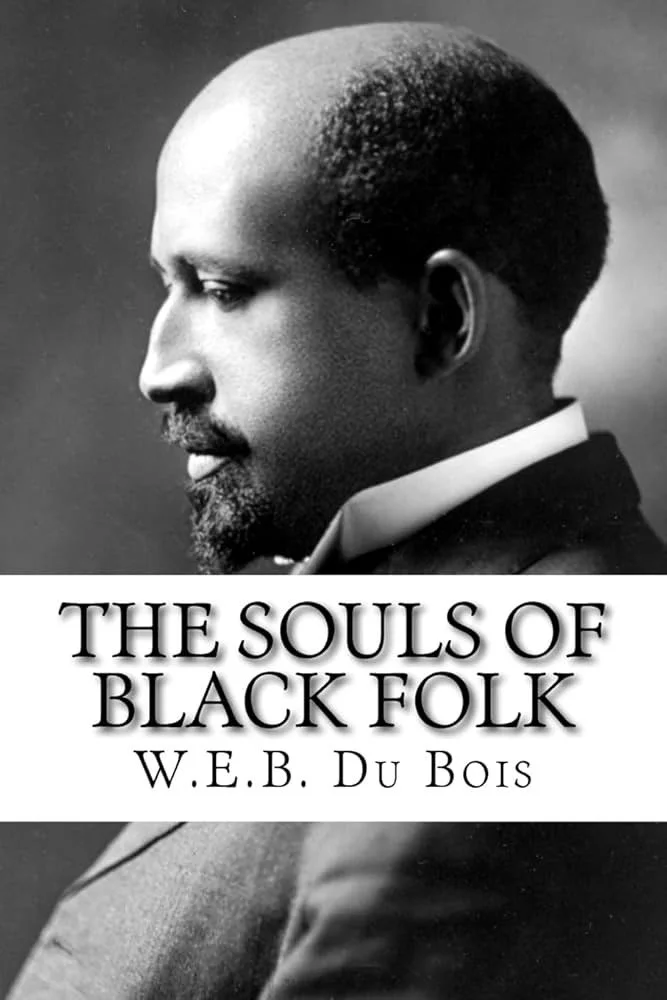
THE SOULS OF BLACK FOLK
The Souls of Black Folk matters to HipHop because it’s one of the earliest works to document Black conditions with precision, structure and cultural authority. Long before HipHop existed, Du Bois laid down a framework for examining the realities that later shaped multiple generations of eMCees, producers, journalists and thinkers. The book is part analysis, part reportage, part historical record. The same qualities that define the best HipHop commentary and lyricism.
Du Bois didn’t just describe a moment. He cataloged systems, mapped patterns, reported lived experience and treated Black communities as a subject worthy of study on its own terms. That approach is mirrored in HipHop’s core function. Documenting circumstances, preserving neighborhood truth and translating local realities into national conversations. The book set a precedent for speaking directly, clearly and unapologetically about conditions on the ground.
The structure of Souls is also significant. Each chapter blends storytelling, data, observation and cultural critique. The same interdisciplinary mix HipHop adopted through journalism, liner notes, documentaries, albums and long-form interviews. The book demonstrated that you could analyze a people, a region, an era and a social system without losing artistic voice or narrative clarity. HipHop followed that path, using art to deliver information with weight and intention.
The Souls of Black Folk remains relevant in HipHop because it forms part of the intellectual lineage behind the Kulture’s most serious work. HipHop didn’t invent sociopolitical commentary, it inherited a tradition and Du Bois is one of the figures who built that foundation in writing. His book is a cornerstone text in the larger archive of Black thought and HipHop, as a global Kultural institution, sits directly in that lineage.
The National Association of Black Bookstores is a nonprofit organization created to increase the visibility, and support to Black-owned bookstores nationwide. Its work centers on preserving Black literary culture while building a clearer national picture of the bookstores, booksellers, and reading communities that continue to sustain it. In March 2026, the organization released its first Stateofthe Black Bookstore report and launched a national Black-owned bookstore directory, documenting 306 Black-owned bookstores across the country. By including brick-and-mortar stores, mobile bookstores, pop-up vendors, and online sellers, the directory serves as both a record and a resource—one that makes these institutions easier to find, support, and study.