Media
HipHop didn’t just spread because of sound. It spread because somebody documented it. Somebody wrote it down, took the photo, filmed the moment, asked the right question, or printed the story when nobody else thought it mattered. This section exists to honor that work and the people behind it.
Media is memory. Without it, moments disappear. Scenes fade. Contributions get lost or rewritten. From early magazines and newsletters to radio shows, documentaries, blogs, and digital platforms, media has been the record keeper of the Kulture. It decides what gets seen, what gets remembered, and how it’s understood. That responsibility carries weight.
Writers, journalists, editors, photographers, videographers, all of them shape the narrative. Not just by what they cover, but how they cover it. The tone, the context, the questions they ask, the details they choose to highlight, it all builds the story around the Kulture. This section is built around that influence.
HipHop media has always been more than promotion. At its best, it’s interpretation. It explains what’s happening beneath the surface. It connects movements to history. It gives language to things people feel but haven’t fully articulated yet. That’s where it becomes powerful.
A strong piece of writing can shift perception. A photograph can define an era. A conversation can reveal something that changes how an artist is understood. These aren’t background roles. They’re part of the Kulture’s foundation. The people doing that work matter.
This space highlights the outlets that carried HipHop forward and the individuals who built their voices around documenting it. The journalists who treated it seriously when others didn’t. The photographers who captured moments that can’t be recreated. The storytellers who turned scenes into archives. Because documentation is preservation.
As the Kulture expands, the need for accuracy, depth, and intention grows with it. Not everything deserves the same weight. Not every story gets told correctly. Media becomes the filter between what happens and what lasts. That’s why standards matter.
This section exists to document, study, and elevate HipHop media in all its forms. From print to digital, from interviews to essays, from photography to film, this is where the Kulture reflects on itself through the people who’ve dedicated their work to capturing it.
Because if nobody tells the story right, somebody else will tell it wrong.
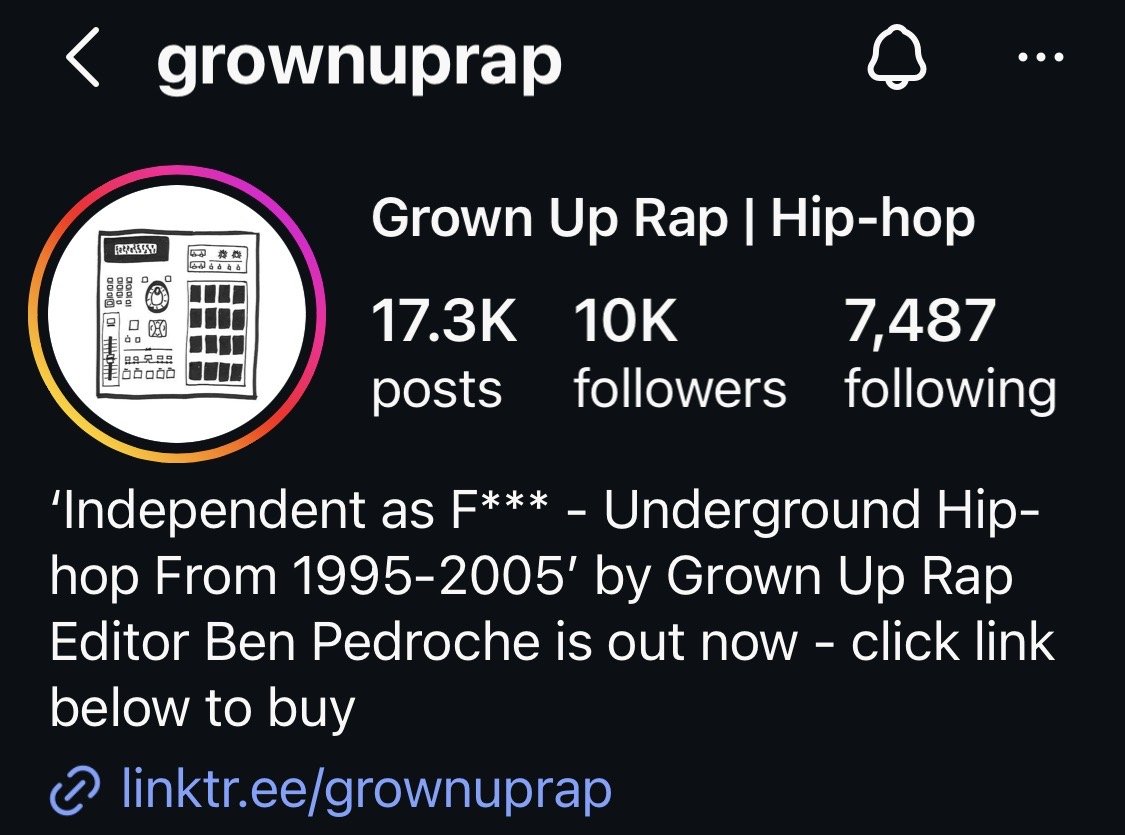

Harry Allen
Harry Allen is the man who proved journalism could have a heartbeat in this Kulture. Not a whisper, not a recap, a heartbeat. When HipHop was still fighting for legitimacy, still being misquoted, misrepresented, and mislabeled by every major outlet in America, Harry Allen stepped in as the voice who said, Nah, let us tell our own story.
He called himself the Media Assassin for a reason. He studied the game, exposed the bias, and broke down how mainstream press framed Black youth, then dismantled that nonsense with receipts sharper than a DeeJay cutting doubles. Harry Allen didn’t just write about HipHop, he protected it. He treated misinformation like an opponent and went straight at it.
Most people know him through Public Enemy and that’s accurate, but it’s only half the truth. Harry Allen wasn’t just down with PE. He helped build the whole strategic framework behind how HipHop fought back in the media. The language. The positioning. The philosophy. The counterattack. HipHop already had the energy, Harry gave it clarity.
His interviews, groundbreaking. His essays, required reading. His presence, a reminder that HipHop needed thinkers and strategists just as much as eMCees, DeeJays, and producers. Harry Allen showed the Kulture that media literacy is as much a survival skill as anything else. If you don’t control your narrative, somebody else will and they’ll usually get it wrong.
Harry Allen was one of the first to treat HipHop as history in real time. Not a phase. Not a fad. A movement. And he documented it like an archivist, challenged it like a critic, and defended it like family. He captured the Kulture with precision, but he also kept the Kulture honest. He wasn’t afraid to hold a mirror up to the very people he loved.
Every podcast, every journalist, every documentary, every think piece, every HipHop historian walking around with a camera phone and an opinion, whether they know it or not, is following a blueprint Harry Allen laid down decades ago. He carved out the lane. He made the job legitimate. He showed that intellect is part of the Kulture.
Harry Allen treated the truth like craft. And he treated the Kulture like something worth protecting.
Charlamagne Tha God
HipHop has always had gatekeepers, but very few were ever willing to hold the gate and hold the Kulture accountable at the same time. Charlamagne Tha God stepped into that space and did something HipHop has needed since the beginning, he forced the conversation to grow up without forcing the Kulture to become something it isn’t.
The truth is, HipHop never needed another radio personality. HipHop needed an interrogator, somebody willing to sit in a studio chair and treat artists like adults, not guests trying to sell a project. For a long time, HipHop interviews were PR cycles disguised as conversations. You came in, you plugged the album, you told a funny story, and you left. What Charlamagne did was break that cycle and reintroduce a lost discipline, the accountability interview. Not the Hollywood version. The hood version, direct, honest, uncomfortable, but rooted in respect for the truth.
Artists knew that stepping into the Breakfast Club meant bringing your full self , not your tough-guy self, not your PR mask. With this, HipHop finally got a space where the Kulture could hear its own contradictions, fears, ambitions, wounds, and wisdom without filters. Those moments became part of HipHop’s permanent record. Future journalists, scholars, and fans will study those interviews the same way we study old jazz conversations, writer salons, or political debates. They’re Kultural artifacts now.
Politicians, CEOs, activists, authors, people who once ignored HipHop suddenly needed that platform. And once they sat down, they had to speak with the same honesty demanded from the artists. That flip in power dynamics is one of the most important milestones in HipHop media history. For decades, HipHop had to go to mainstream outlets to tell its story. Charlamagne helped reverse that flow. If you wanted to speak to the Kulture, the Breakfast Club had the mic.
His contribution isn’t about personality. It’s about authorship. He helped write the modern chapter of how HipHop talks to itself, how it critiques itself, and how it presents itself to the world.
Funkmaster Flex
Funk Flex is the air raid siren of HipHop. The moment that bomb drops, the whole Kulture knows somebody just said something serious. For three decades, that sound has been the punctuation mark of New York rap. The exclamation point, the alarm clock, the Kultural stamp. Flex didn’t just play records, he turned the booth into a battleground and the radio waves into a proving ground.
He’s one of the last true radio kings. Before streaming, before algorithms dictated taste, before social media turned every personality into a brand, Flex was already shaping the direction of the Kulture in real time. Hot 97 wasn’t just a station, it was the command center for East Coast HipHop, and Flex was the general behind the tables. He picked the winners, he spotted the moments, he amplified the streets, and he held artists accountable when the industry tried to water things down.
The Funk Flex Freestyle series is historic. Not popular, not viral, historic. He gave the spotlight equally to legends and unknowns, and he didn’t care about your label push. If you had bars, he’d let you burn the room down. If you didn’t? He’d let you embarrass yourself for all to see. Flex stayed committed to the raw spirit of eMCeein’, skill first, everything else second.
Flex kept the art of breaking records alive when corporations were strangling radio playlists. He kept turntablism visible when most major stations abandoned it. He made the DJ a personality again. When he brought car culture, sneaker culture, mixtape culture, and radio culture into one ecosystem, he showed the world how big HipHop really was.
On top of that, Flex never hid from controversy. Sometimes he’s right, sometimes he’s wrong, but he never hides. That honesty, messy or not kept it authentic at moments when it could’ve gone corporate quiet. Love him or hate him, every eMCee, every DJ, every fan knows the truth, If you made noise on Hot 97 during Flex’s reign, he made it known. Plain and simple.
He’s a curator with the instincts of a fan and the courage of an archivist. He preserved the raw edge of New York while pushing the Kulture into new eras. Flex is one of the pillars of HipHop broadcasting, unpredictable, passionate, loud, chaotic, hilarious, and absolutely essential.
There’s a thousand voices in HipHop media today, but only one voice that can stop the room, drop a bomb, and make the whole world sit up straight. Flex changed the way HipHop sounds. There’s not many people who can say that.
JUSTIN HUNTE
Justin Hunte is one of the rare analysts who treats the Kulture with the seriousness it deserves. When he breaks down an album, a trend, an artist arc, he does it like a scholar raised on rap. Someone who understands that the stories behind the music are just as important as the music itself. He’s not here for drama. He’s here for record-keeping, lineage, context, and truth.
He helped professionalize HipHop journalism, his work at HipHopDX, his Power Rankings, his historical essays, his breakdowns on The Company Man and later on his own platforms. These didn’t just entertain people, they raised the standard. They created expectations. He showed that analyzing rap is not a hobby, it’s a discipline. Because of that, a whole generation of writers, vloggers, and media voices have a blueprint to follow.
In a Kulture that moves fast, forgets fast, and trends even faster, he slows everything down and forces the audience to see the bigger shape. Without people like Justin, HipHop history gets lost, misremembered, or repackaged by people who were never part of it in the first place. He’s a Kultural librarian. A historian with a broadcast voice. A journalist who actually honors journalism. Justin documents what would’ve been erased, explains what would’ve been misunderstood, and elevates conversations that would’ve died as comments under a tweet. He treats rap like literature. He treats artists like authors. He treats the Kulture like a country with its own constitution, myths, politics, wars, heroes, and philosophies.
Every generation needs someone who can translate the moment with honesty and range. Justin Hunte is one of those voices. A truth-teller, a thinker, a builder, and one of the few who takes the Kulture seriously enough to study it while loving it enough to challenge it. HipHop needs its eMCee’s. HipHop needs its producers. But HipHop also needs its journalists. And Justin Hunte stands among the best we’ve ever had.
CURTISS KING
Curtiss King, he’s not just a creator, he’s an architect of independence. Where most artists chase the stage, he chased the system behind the stage. The business, the mindset, the tech, the habits, the healing, the entire ecosystem that determines whether artists survive or self-destruct.
Curtiss showed a whole generation that you don’t need a label to have a career, a gatekeeper to be valid, or a co-sign to be valuable. He flipped the whole starving-artist stereotype inside out and built a blueprint where artists could be healthy, financially stable, and creatively free, all at the same time. He expanded the definition of HipHop entrepreneurship. He proved that a beatmaker can become a CEO. A rapper can become an author. A producer can become a wellness guide. A creator can become a community builder. He made independent artist sound powerful. He turned DIY into a badge of honor.
A lot of people talk about ownership. Curtiss King actually teaches it. He wrote books, courses, podcasts, workshops, beat packs, production tools, and educational content that thousands of independent artists still rely on today. He breaks down royalties, publishing, distribution, marketing psychology, audience building, discipline, productivity, and emotional management with the clarity of someone who learned all of it the hard way and decided nobody after him should struggle the same way. He’s the teacher our Kulture didn’t know it needed.
Curtiss gave the Kulture a self-sustainable model. A way to thrive without selling your soul, losing your mind, or burning your craft to the ground. He built tools for everybody behind him to use, tools that outlive trends, albums, or social media eras. He’s shaping the mindset of the next generation. Not just their beats. Not just their bars. Their belief system. And the wild part, he did all that while still making music, still producing, still showing up as a creator. Proof that walking in your purpose doesn’t take you out of the Kulture, it plants you deeper in it.
Curtiss King is the rare kind of figure who doesn’t just contribute content. He contributes infrastructure. He contributes philosophy. He contributes longevity and HipHop needs all three if it’s gonna make it another fifty plus years.
Ralph McDaniels
Ralph McDaniels didn’t document HipHop, he caught lightning on tape while everyone else was still arguing about whether the storm even mattered. Before the labels woke up, before MTV cared, before America figured out HipHop wasn’t a fad, this man picked up a camera and said, nah this is history, let me press record.
That decision changed the whole trajectory of the Kulture. Most people don’t understand how deep Ralph’s impact goes. A lot of your favorite artists. Your favorite videos. Your favorite moments. They only exist, literally exist, because Ralph McDaniels stood there with a camera when nobody else would’ve bothered.
He wasn’t chasing trends. He was the archive. He gave the Kulture receipts before the Kulture had a filing cabinet.
Music videos today. The aesthetic. The storytelling. The camera language. The way cities look on screen. The way HipHop moves visually. Ralph helped shape all that. He made visual grammar out of raw neighborhoods. He turned front stoops into sets, blocks into film locations, and artists into protagonists of their own mythology. Then he went a step further, he built Video Music Box.
That’s not just a show, that’s HipHop’s original television network. Before YouTube, before Rap City, before 106 & Park, before algorithm playlists, Ralph gave the Kulture a platform shaped by us, for us, and about us. He gave kids in the hood the same access to media that kids in Hollywood had. He let artists speak without filters. He let communities see themselves reflected back, not judged, not edited, not packaged for outsiders. If HipHop had a mirror in the 80s and 90s, it was Ralph’s lens.
He didn’t just film the Kulture, he preserved it. He safeguarded footage no one else thought to keep. He saved interviews nobody realized would be legendary. He archived eras in real time. Decades later, that vault is priceless. You can’t tell the story of the Kulture without tapping his footage.
Ralph McDaniels is more than a documentarian, he’s a Kultural architect. He gave HipHop its visual memory. He captured the humanity behind the bars. He protected moments that would’ve vanished into the ether. Block parties, club shows, community events, early performances, young legends before they knew they were legends. Ralph made sure the world would see HipHop, not just hear it.
Kim Osorio
Kim Osorio is one of the few people in HipHop who earned her stripes with nothing but pen pressure, consistency, and standing ten toes down in a room that wasn’t always built for her. She wasn’t just writing about the Kulture, she was holding the line for it.
As the first woman Editor-in-Chief of The Source, she stepped into a position that was basically a pressure cooker with a desk in it. Every issue, every cover decision, every interview, all eyes were on her. You mess up, the streets talk. You do well, the industry talks. And somehow she managed to do the job with clarity, backbone, and a high standard that forced the whole space to level up.
Her voice balanced two worlds, the newsroom and the block. She knew how to write for the Kulture without watering it down, but also knew how to protect it from people who didn’t understand it. That’s a razor-thin line that only a handful of journalists ever walk cleanly.
Kim took HipHop journalism from write-ups to reporting. From gossip to documentation. From personality-driven chaos to actual integrity. She wasn’t scared to challenge artists. She wasn’t scared to challenge executives. That’s exactly why she’s respected today, she moved like someone who believed HipHop deserved truth, not PR.
Her career became a blueprint for the next generation of writers, editors, and Kultural critics, especially for women coming into a male-dominated media space. Kim showed them you don’t have to shrink yourself, soften your tone, or play nice to be taken seriously. You just have to be good, consistent and unshakeable.
Beyond the journalism, she became a Kultural historian without ever branding herself as one. Her interviews, her editorial decisions, her profiles, those are time capsules now. People look back at those Source eras and use her work to understand the climate, the politics, the tension, the brilliance of that time.
Kim protected the Kulture from lazy storytelling. She earned her respect the hard way, without shortcuts. The HipHop media world we have today, podcasts, newsletters, critics, video essays, commentary platforms, all of them are operating in a lane she helped pave. In the same way eMCees have their forefathers(mothers), HipHop journalism does too. Kim Osorio is one of them and she sits in that upper tier where the ones who actually gave a damn about the truth are remembered.
Stretch & Bobbito Show
The Stretch & Bobbito Show wasn’t just a radio program, it was a proving ground. A Kultural checkpoint. A street-level filtration system where greatness got recognized early, long before the industry caught on. What they built up at WKCR wasn’t polished, wasn’t corporate, wasn’t chasing ratings, it was raw HipHop in its most honest, unfiltered, unpredictable form.
Their importance comes from one simple truth, they gave the future a microphone before anybody else believed in it.
Long before the charts, before the label budgets, before the glossy videos, Stretch & Bobbito were the ones who opened the door. Their show became the place where unsigned talent walked in hungry and walked out transformed, not because they got a contract, but because they finally had a platform that respected the craft.
You name the legends, Nas, Biggie, Big L, Jay-Z, Wu-Tang, Mobb Deep, Pun, The Fugees, they all touched that mic. They all stepped into that tiny studio, half asleep, half drunk, half broke, fully focused, and they left pieces of history on those tapes. But the point isn’t who came through, it’s why they came through. Stretch and Bobbito created a space where eMCees had to show what they really had. No entourage. No PR spin. No industry polish to hide behind. Just bars and breath control. The show mattered because it didn’t play into the game, it moved with the Kulture.
They brought a level of humor, personality, and community that made listeners feel like they were in the room. They cracked jokes, played wild records, freestyled nonsense, cut the instrumentals wrong on purpose, it was chaos, but it was our chaos. Authentic, homegrown and HipHop at full spirit.
Behind all the laughter was a deeper purpose, they preserved the underground. At a time when the industry was getting shinier, more corporate, more sanitized, Stretch & Bobbito kept the dirty air vents open, the ones real eMCees breathe through. Their show became a pipeline that fed the entire ecosystem, Labels listened, magazines listened, street teams listened, the hood listened, kids who were dreaming about rapping listened. It was the Kulture’s early-warning radar for talent. They didn’t just help launch careers, they documented the DNA of a whole era. The tapes from that show are priceless. Not because they’re rare, but because they’re pure. They remind people what HipHop sounds like before the world starts telling it what to be.
Stretch & Bobbito kept the door open at a time when the game was starting to close it. They believed in artists beforeit was profitable to believe in them. They held down the spirit of discovery that keeps HipHop alive. In a Kulture built on word of mouth, on co-signs, on raw energy, on the hunger you hear in somebody’s first freestyle, Stretch & Bobbito were the pulse that helped the world hear the underground’s heartbeat.
Sway
Sway is one of the last real gatekeepers, not the industry kind, but the Kulture kind. The type of gatekeeper who protects the craft, checks the temperature of the streets, and opens the door only when somebody truly earned their stripes. He’s the griot of the broadcast world, the calm center in the middle of HipHop’s loudest storm, and the host every eMCee respects because he actually respects them.
Before viral moments, before freestyles became clickbait, before interviews were chopped into eight-second memes, Sway was building the blueprint for how HipHop conversations should sound. Honest. Grounded. Spacious. He let artists talk like human beings, not headlines. He let the Kulture breathe.
Sway in the Morning became a rite of passage. A proving ground. A temple. The place where eMCees walked in as up-and-coming and walked out stamped by the entire Kulture. You spit on Sway’s show, that performance follows you for life. It becomes part of your résumé whether you want it to or not. Because Sway’s stamp isn’t just cosign, it’s lineage. It puts you on the same wall as Kendrick, Black Thought, Crook, Lupe, Rapsody, King Los, legends catching bodies live on air.
Sway’s impact goes deeper than freestyles. He’s been documenting HipHop since the ‘90s, MTV, radio, journalism, film, activism. He’s one of the rare media figures who saw every era up close and never switched sides. He didn’t chase the algorithm. He didn’t pivot to gimmicks. He stayed with the Kulture, even as the Kulture evolved into a global force.
He gave platforms to voices mainstream media ignored, women eMCees, underground spitters, political thinkers, community leaders. He understood that HipHop isn’t built on popularity, it’s built on perspective. He always made room for the people who had something real to say.
Most importantly, Sway treats HipHop like family.
He listens before he talks. He mediates when beef threatens to spill over. He builds bridges where other media personalities burn them down for views. He’s a unifier, an archivist, and a Kultural diplomat, somebody who carries HipHop with dignity instead of drama. In a landscape full of noise, Sway is signal. In a world full of media personalities, he’s one of the few custodians. Decades from now, when people study the evolution of HipHop journalism and broadcast culture, they’re going to see his name etched into every era like a watermark.
The Temple of HipHop
The Temple of HipHop isn’t a fan club. It’s not a nostalgia museum, or some remember when society. It’s the closest thing HipHop has to a Kultural embassy. A place built not for entertainment, but for preservation, education, and the spiritual grounding of the HipHoppa.
Long before the industry cared about archiving anything, long before universities started teaching HipHop Studies, KRS-One planted a flag and said, this is a Kulture, this is a people, and this deserves protection. That alone makes the Temple historic. But its importance runs deeper. The Temple of HipHop is one of the few institutions that approaches HipHop as a civilization, not as a product. It treats eMCeein’ like literature, DeeJayin’ like musicianship, Breakin’ like classical dance, Graffiti like contemporary art, and community-building like a civic duty. It gave HipHop vocabulary, structure, doctrine and a sense of itself.
Knowledge. Love. Peace. Unity. Reflection. Respect for elders. Responsibility for the youth. Pride in expression. Integrity in action. A global family with local roots.
The Temple didn’t chase mainstream approval. It courted Kultural maturity. Where the industry marketed HipHop’s outer image, the Temple addressed HipHop’s inner life. Where corporations monetized the art, the Temple defended its meaning. Where the mainstream saw genres, the Temple saw generations. Because of that, it became a cornerstone for anybody trying to understand HipHop beyond the charts. It influenced educators, activists, youth workers, journalists, archivists and anybody who ever tried to treat this Kulture with the seriousness it deserves.
Too many people haven’t read the Gospel of HipHop cover to cover yet, but its impact still runs through the Kulture. You see it every time an artist calls HipHop a way of life. You hear it when elders speak about the elements. You feel it when the Kulture circles back to consciousness, responsibility, or unity.
The Temple of HipHop is one of the reasons those conversations even exist. It’s not about agreeing with every word or adopting every principle. It’s about recognizing that someone took the time, decades of time. To define, defend, and document HipHop as a living people with traditions worth preserving. In a world where the Kulture keeps evolving at the speed of a trend, the Temple stands as a reminder, HipHop didn’t start on a stage, it started in a community.
Touré
Touré is one of the rare voices who treats HipHop like an intellectual ecosystem. He doesn’t just cover artists, he studies them. He asks the uncomfortable questions, the layered ones, the ones that dig past the surface and pull the truth out in ways that feel like a therapy session, not a press run.
Most media folks chase moments. Touré chases meaning. That’s why artists trust him. That’s why thinkers respect him. That’s why the Kulture keeps him in rotation, year after year.
His interviews are a whole different sport. He doesn’t sit across from guests trying to drag controversy out them. He sits across from them trying to pull out clarity. He’s one of the few interviewers who gives HipHop the same depth, seriousness, and nuance that politics, literature, and film have always gotten.
HipHop is bigger than music. It’s identity. It’s worldview. It’s sociology. It’s philosophy. Touré knows that, and he speaks to artists the way scholars speak to authors, not as performers but as architects of Kultural language.
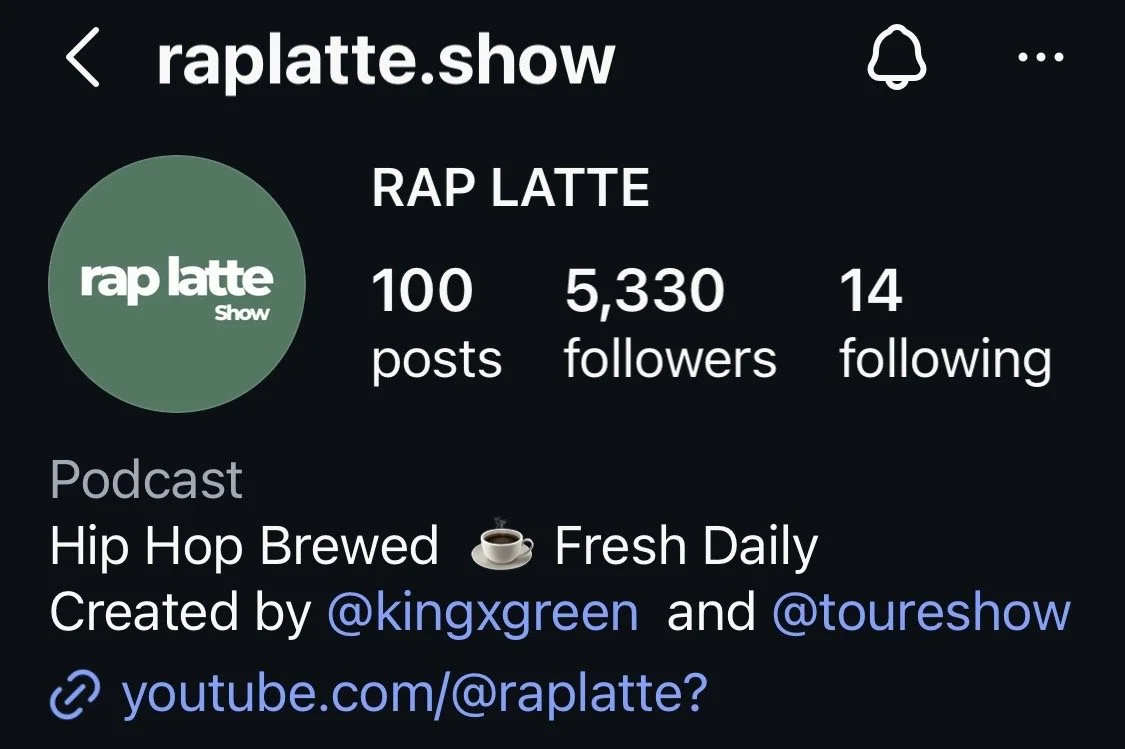
When you tune in, whether it’s The Touré Show, Rap Latte, or any of the spaces he builds, you’re stepping into conversations that treat HipHop as something worth documenting with precision. He creates space for long-form thought in a Kulture that moves at 100 miles per hour. And he does it while staying plugged into the modern era. He’s visible on social media, he’s tapped into the current cycles, he knows the new generation, and he can hold his own.
What makes Touré valuable to HipHop isn’t just the platform, it’s the perspective. He bridges lanes that don’t always overlap, the mainstream press, the podcast world, academic conversations, and the barbershop-level truth-telling that defines HipHop commentary at its best.
Touré makes the Kulture legible to outsiders without watering it down. In a landscape where everyone wants quick takes, Touré still gives HipHop context. That is why his voice is going to matter even more as the Kulture moves into its next 50 years, because he’s one of the people giving HipHop the documentation, the nuance, and the serious examination it deserves.