Entrées
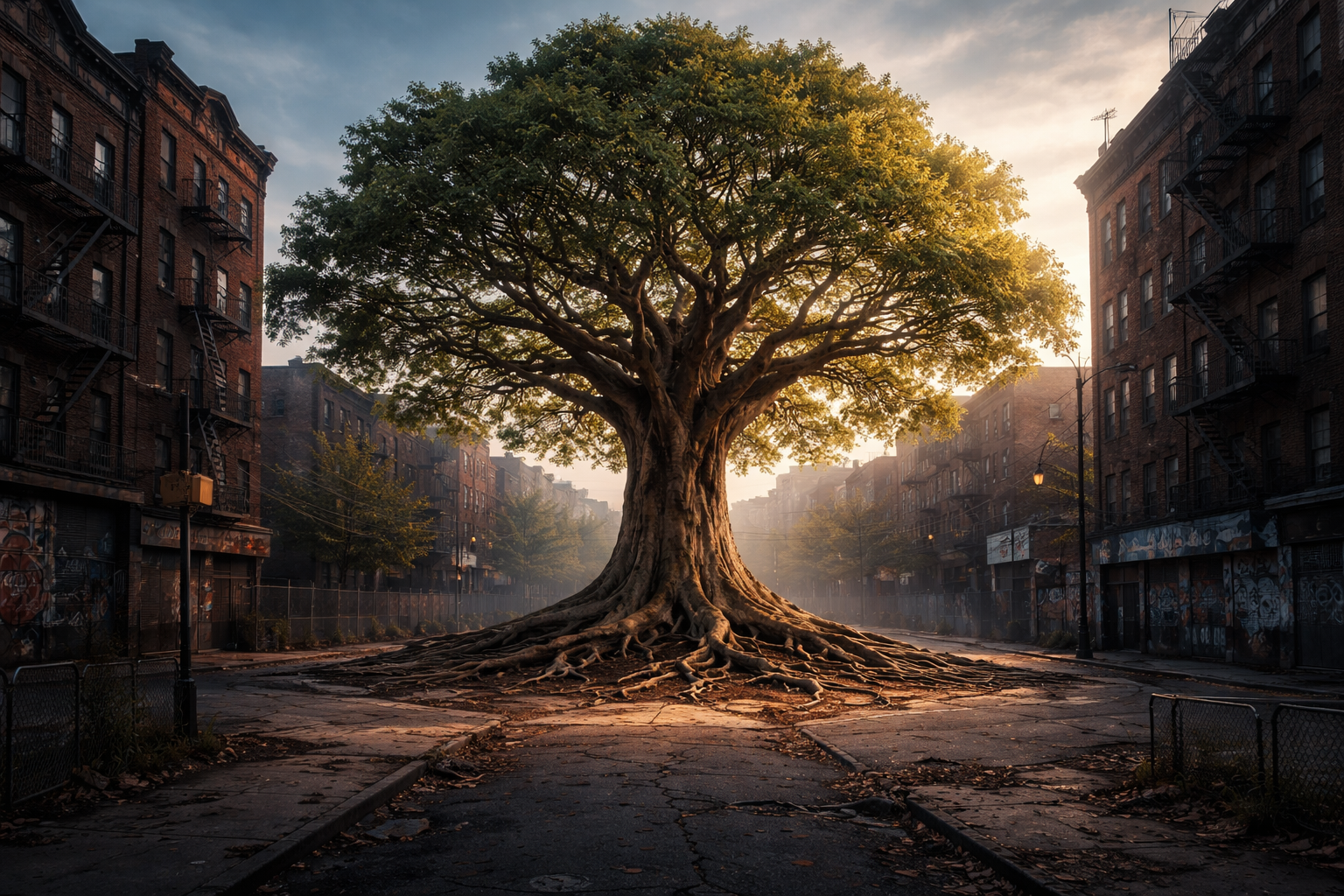
HipHop didn’t come out of nowhere. It came out of somewhere deep, rich, and already seasoned. Every drum break, every bassline, every melody that’s been flipped into something new has a history behind it. This section exists to trace those roots and give them the space they deserve. Because sampling is not random. It’s recognition.
A producer hears something in a record most people would overlook and understands its potential in a completely different context. That instinct connects HipHop to the musicians who came before it, not as a copy, but as a continuation. The past gets pulled into the present and given a new life.
That’s where the name comes from. Entrées are the main course. The originals. The records that carried weight long before they were sampled and still carry it after. Jazz, funk, soul, rock, blues. These aren’t just influences, they’re foundations. Without them, the sound of HipHop doesn’t exist the way we know it. This section is built around that foundation.
Here, the music gets revisited in its original form. The compositions, the arrangements, the musicianship, all of it gets the attention it deserves. You start to hear where certain rhythms came from, where certain moods were born, where certain ideas first took shape.
The creators matter just as much. The artists behind these records weren’t thinking about being sampled decades later. They were pushing their own boundaries, experimenting with sound, creating something that felt new in their time. That’s what made the music strong enough to last and flexible enough to be reimagined.
Then there are the moments that became pillars. Records that don’t just get sampled once, but over and over again. Breaks that defined eras. Basslines that instantly feel familiar even in a completely new track. These aren’t just songs, they’re source code. You hear them and you hear HipHop’s lineage at the same time. That connection runs deep.
When you study the Entrées, you start to understand the language of sampling. Why certain sounds get chosen. How textures translate across time. How emotion carries from one generation to the next without losing its impact. This isn’t nostalgia. It’s awareness.
This section exists to document, study, and honor those origins. From the records themselves to the artists who created them, from the original compositions to the sampled moments they inspired, this is where HipHop acknowledges what it was built from. Because every flipped sample still carries the soul of where it came from.

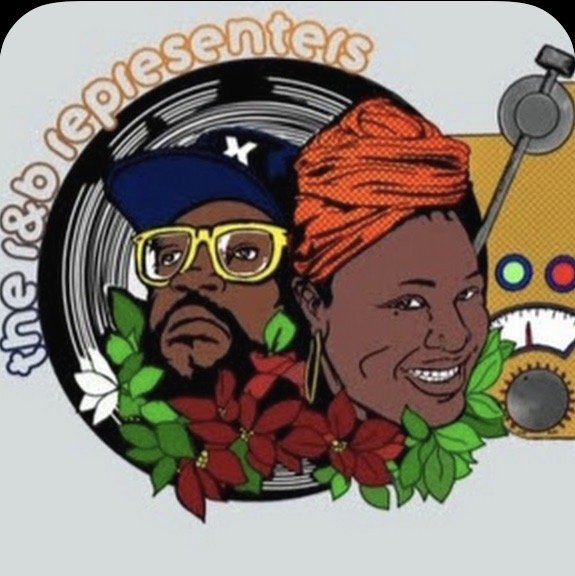
JR and Naturally Alise are the R&B Representers, two dynamic content creators who highlight the architects, honor the legends, and educate about the history of R&B music with integrity while making you laugh!
JR and Naturally Alise host Catch That!, a YouTube series of music conversations with people in the music industry taking a deep dive into influential R&B artists, albums, and eras. New episodes every Sunday LIVE at 2pm EST
Ron Carter
Ron Carter is one of the greatest jazz bassists ever. A man whose lines didn’t just support the music, they defined it. His upright bass gave tracks weight, gravity, movement and the kind of subtle motion that convinces your head to nod and your mind to drift deep.
When producers dug for jazz records in dusty shops, hunting for loops, solos, grooves, ambience, they kept pulling up records with Carter’s bass lines. His playing gave sample-hunters texture, funk, soul and timelessness. Those crates became treasure troves not because of fame or charts, but because of the musicians behind the record, musicians like Carter, whose craft said more in notes than most rappers say in verses.
His musicianship matters because HipHop, especially its golden-era, Boom-Bap producers, rested heavily on the jazz aesthetic. The upright bass, the walking lines, the live-instrument feel, they gave rap songs depth. They gave them warmth. They made them feel like something more than just beats and loops, like history, like soul, like heritage.
By giving the Kulture access to those sounds, Carter indirectly shaped a whole generation of beats, heads, backpackers, underground fans and mainstream listeners, reminding them that HipHop wasn’t born in a vacuum. It was built from the soul, vinyls, grooves, samples, live musicians and re-imagined jazz chord progressions.
Ron Carter is who we pull from when we want to lay our rhymes over soulful bass. It feels much more heavier than one over a programmed drum machine. Every time a producer digs up an old jazz record and finds that walkin’ bass pattern, that warm groove, that groove that just feels right, that’s Ron Carter’s spirit echoing through HipHop. Because of that, he has a place in the archive. As a silent architect.
Good Times by Chic
Some records walk into the party. Good Times kicked the door off the hinges, walked straight to the center of the floor and rewired the entire game. Chic were architects of disco, masters of musicianship, Nile Rodgers on guitar and Bernard Edwards on bass operating like scientists in a groove laboratory. What they built on August 1st, 1979 became one of the most important foundations HipHop ever stood on. That Bassline.
Bernard Edwards didn’t just play a riff, he built a spine for an entire Kultural movement. When Good Times hit the streets, DeeJays weren’t just spinning a disco record, they were discovering a universal language for dance floors in every borough. The groove was clean, hypnotic, mathematical, soulful, the perfect loop before HipHop even had a name for loops.
Enter The Sugarhill Gang, Rapper’s Delight, the first HipHop record to crack the mainstream, it’s literally riding the Good Times groove. Not inspired by, not influenced by, straight-up lifting the entire bassline, turning it into a 15-minute block party on wax. That moment changed everything. HipHop hit radio, Labels took notice, the Kulture got a passport to cross state lines, eMCees realized their voices could travel farther than the park. The raw energy of the HipHop was being transmitted through Chic’s musicianship.
The Loop That Never Died. After that, Good Times became a Kultural utility belt. Good Times is one of the moments where HipHop and disco grabbed hands and traded energy. It represents, the birth of commercial HipHop. The fusion between live musicianship and DeeJay Kulture, The transition from park jams to vinyl history. The realization that this Kulture could be global
Nile Rodgers and Bernard Edwards gave HipHop a blueprint for how groove could support bars, how rhythm could fuel a movement, how a bassline could become a national anthem for good vibes and better nights. Good Times will forever matter because it’s one of the first dominoes that helped HipHop topple into the mainstream. A disco classic. A HipHop cornerstone. A Kultural engine that still runs clean 45 years later and locked in the archive forever.
The Incredible Bongo Band
If HipHop has sacred scriptures, then the Incredible Bongo Band is one of the groups that wrote the Genesis chapter without ever touching a mic. They weren’t a band in the traditional sense. They were more like session killers, percussionists, arrangers, musicians, who walked into a studio in the early ’70s and accidentally created some of the most important breakbeats in HipHop history. Their music didn’t just get sampled, it built the Kulture.
Apache. The break of all breaks. The drum pattern that made DeeJays legendary. The rhythm that powered park jams, gave B-Boys superpowers and told every eMCee on the mic, to step correct. Kool Herc turned that record into a ritual. Grandmaster Flash turned it into a tool. Afrika Bambaataa turned it into a Kultural anthem. From the NY to Compton, from RZA to Premier, from LL to Nas to Missy to the Beastie Boys, generations kept pulling from that same groove. One drum break kept the Kulture’s heartbeat steady for five decades and it still moves crowds today.
The Incredible Bongo Band didn’t just give HipHop Apache. Their entire catalog is a crash course in raw percussion, bongos, congas, breaks, rhythms, the exact ingredients HipHop producers search for when they want a track to live, not just play. Their music feels like motion. It feels like graffiti energy, park-jam electricity, the pulse of a crowd before the first bar drops.
The Incredible Bongo Band didn’t just influence HipHop, they’re part of the DNA. A foundation stone. A Kultural ancestor you may not recognize by face, but you definitely know by feel. Every time a DeeJay cuts up a break, every time a breaker snaps into a footwork pattern, every time a producer flips a dusty drum loop into something new, those bongos are still echoing. Their fingerprints are on the birth certificate of the Kulture, that earns them a permanent place in the archive.
Bob James
Bob James is one of the quiet pillars of sound that HipHop was built on. He’s a jazz and fusion musician whose keys, chords, and melodies found new life under vinyl needles and MPC pads and what he created is woven into the foundation of HipHop’s sonic DNA.
In the early days of sampling, DeeJays and producers dug through crates looking for soul, funk, jazz, something rich, something deep. Bob James’ catalog answered that call better than most. His tracks carried mood, atmosphere, groove and musicality, that combination gave eMCees a backdrop where lyrics didn’t just ride beats, they told stories over orchestras of sound. When producers looped Bob James, chopped piano licks, snapped snares around his grooves, they weren’t just borrowing music, they were paying homage to the architecture of rhythm and melody. They turned his compositions into new poems, new rhythms, new generations.
His music gave eMCees and producers an emotional palette, depth, seriousness, melancholy, aspiration, reflection, all built into the instrumentation. That’s why so many classic HipHop tracks sample piano licks, smooth jazz lines, chilled-out grooves, they’re descendants of his work.
Bob James provided texture when HipHop wanted to grow up. He gave sonic maturity, a chance for eMCees to explore introspection, social commentary, love, pain, hope, over music that wasn’t just drums and loops, but full-bodied instrumentals. He showed that HipHop didn’t need to deny melody or musicianship to be raw, it could expand, embrace complexity and still speak truth to the streets.
For any eMCee who ever laid a verse on a soulful loop, for any producer who ever sampled a Rhodes chord, for any beat that made you feel it before it made you nod, you owe a little to Bob James. He’s part of the backbone. Part of the history. Part of the reason HipHop became more than a moment, a movement. Bob James helped build the foundation beneath the bars.
Quincy Jones
Quincy Jones isn’t just a producer, he’s a whole ecosystem. A constellation. A lineage. When HipHop was still figuring out its voice, Quincy already had fifty years of musical language running through his veins. Jazz, soul, funk, pop, film scores, global arrangements, he touched every corner of Black music before the Kulture even found its first sampler. So when the next generation of architects started chopping breaks, looping grooves and flipping the DNA of Black music into this brand-new art form, they were pulling directly from Quincy’s world. Not as a sample library, but as a blueprint. And Quincy knew it.
The moment he stepped into the HipHop space, especially with Back on the Block, Q’s Jook Joint and the range of eMCees, DeeJays and producers he brought into his orbit, it wasn’t some old legend lending his name to something trendy. It was a master conductor recognizing the next great movement in Black creativity and choosing to amplify it instead of ignore it. Quincy validated it publicly, artistically and loudly.
What makes his collaborations powerful is how intentional they were. He let HipHop be HipHop right next to the orchestra, right next to the horns, right next to the choir. He made room for the Kulture inside the biggest musical rooms in the world. He did it with the respect of somebody who understood that HipHop wasn’t a phase. It was a continuation. Through Quincy, HipHop got access to a different level of musical craftsmanship, the kind you only learn by working across genres, across continents, across decades. The young artists he collaborated with got to see their own artform framed with the seriousness normally reserved for high music. It shifted how the industry looked at rap. It shifted how rap looked at itself.
Quincy’s work with HipHop proved it wasn’t just pulling from the past, it was evolving it. He showed that the break beats the Kulture sampled weren’t relics, they were conversations. Living threads. Bridges between eras of Black sound. His cosign wasn’t just a stamp. It was a signal to the world. This Kulture is legitimate. This Kulture is powerful. This Kulture is the next chapter of Black music history and history backed him up. Quincy Jones opened the door, pointed at the eMCees and DeeJays walking in and said, pay attention, this is greatness.
Clyde Stubblefield
Clyde Stubblefield didn’t rap. He didn’t DJ. He simply played the drums. He play the drums with a funk so stank he changed HipHop forever. Generations of eMCees built their whole delivery on top of his swing.
The Funky Drummer. One of the most sampled drum patterns in HipHop history. It’s alive. It breathes. It moves. It carries attitude in every ghost note, every snare flick, every pocket he created without overplaying. Clyde Stubblefield didn’t just keep time, he shaped it. He set the standard for what a break beat is supposed to feel like. When DeeJays first started looping vinyl, trying to extend that magic moment for the breakers and eMCees, Clyde’s groove gave them the perfect canvas.
His playing is the backbone behind golden-era classics, early East Coast anthems, West Coast storytelling and everything in between. Producers hunted for that drum tone, that shuffle, that impossible-to-teach bounce that made every bar fall right into place. It wasn’t pristine. It wasn’t quantized. It was human perfection, the kind machines still can’t recreate clean
Clyde Stubblefield gave HipHop one of the purest gifts a Kulture could receive, the heartbeat of a timeless beat.