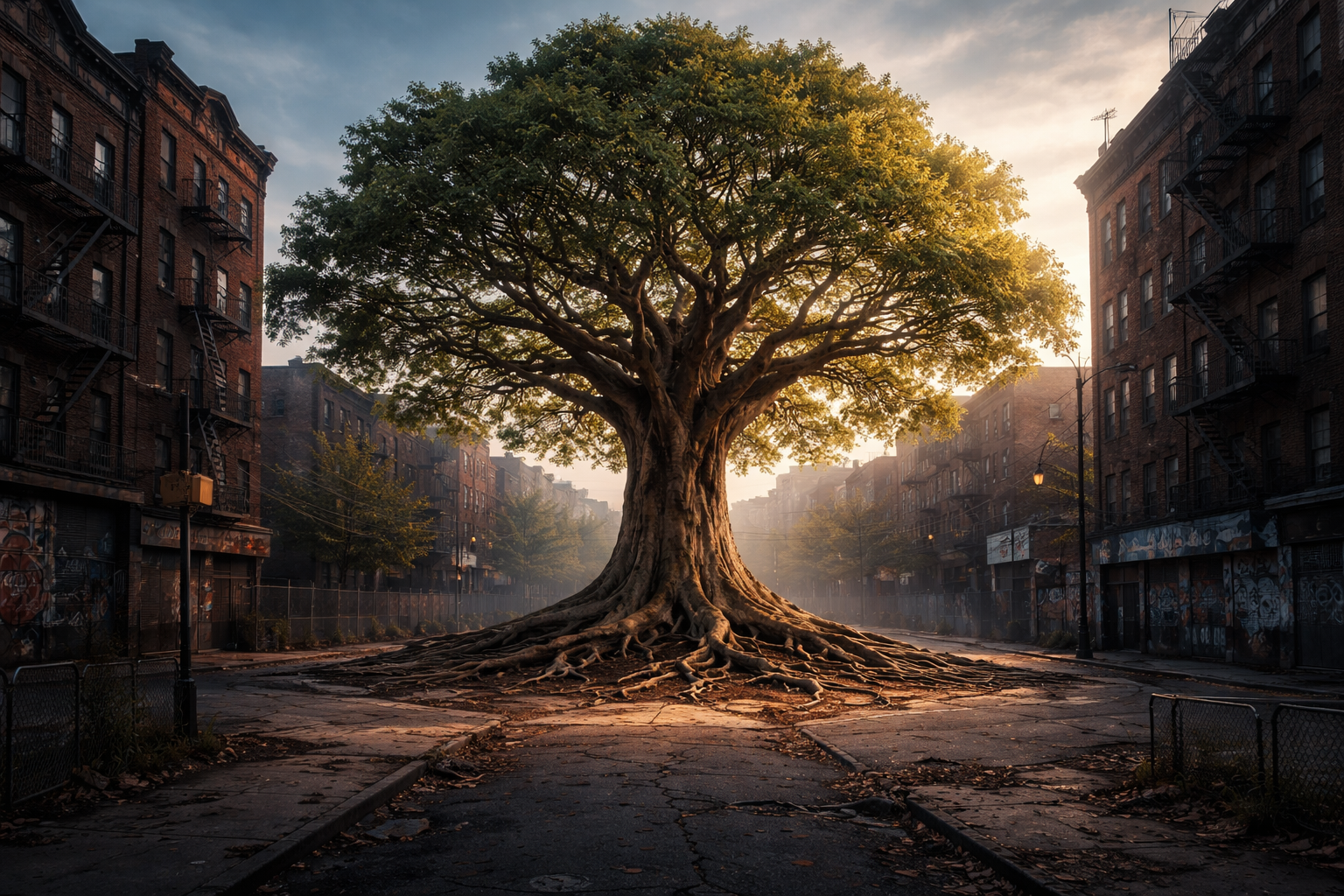
Citizens
HipHop was never built by a select few. It was built by everybody who carried it with them, whether they were on a stage or on the clock. The music made it visible, but the people made it real. This section exists to recognize that full picture.
A citizen of HipHop isn’t defined by fame. It’s defined by influence. By how the Kulture shows up in the way you move, the way you think, the way you speak, the way you create, and the way you pass something down to the next person. You don’t need a microphone to represent HipHop. You just need to carry it with intention. That’s what connects this space.
You’ll see actors, athletes, public figures, people whose platforms reach millions. But you’ll also see baristas, electricians, bus drivers, dentists, babysitters, people whose impact lives in their communities, their families, their day-to-day work. Different stages, same foundation. Because the Kulture travels with you.
Wherever you go, it goes. Into boardrooms, classrooms, job sites, studios, city halls, everywhere. It shapes perspective. It influences decisions. It shows up in style, in language, in values. You can hear it, see it, and feel it, even when it’s not being announced. This section is built around that presence.
Citizens are documented here not just for who they are, but for what they bring. Skills, talents, ideas, experiences, all of it matters. When you look across this space, you start to see a pattern. The Kulture produces people who create, who adapt, who find ways to express themselves regardless of the environment they’re in. That’s not coincidence.
It’s the result of growing up in something that teaches resourcefulness, confidence, and identity from the ground up. Whether that gets expressed through art, business, service, leadership, or craft, it still traces back to the same source. This is where those paths meet.
For members of HipHop Headquarters, especially those who move more quietly, this is the gathering space. Profiles live here. Introductions happen here. It’s a place to be seen, not for status, but for substance. A place where contribution matters more than visibility.
Everybody here has something. Not always the same thing, not always in the same form, but something worth building with. When you put it all together, you don’t just see individuals, you see a network. A Kulture that didn’t stay confined to one lane, but expanded through the people who carried it forward. This section exists to document, connect, and elevate those citizens.
Because HipHop isn’t just what’s performed. It’s what’s lived.
MAHERSHALA ALI
Mahershala Ali stepped into the world’s spotlight as an elite actor, but long before the Oscars, long before Moonlight or True Detective, he was out here rhyming under the name Prince Ali. Sharpening his craft, studying the science of language and carrying himself with that quiet, disciplined confidence you only get from HipHop roots. You hear it in his cadence when he speaks. You see it in the way he builds a character. There’s a rhythm to the man. A timing. A precision. That’s HipHop all day.
He wasn’t somebody who treated rap like a phase or a marketing experiment. He actually dropped projects, recorded joints, rocked with producers and approached music like a real student of the Kulture. Even when the acting lane opened, when he chose the path that would eventually define his name across the world, he never abandoned the ethic that HipHop gave him. Craft above ego, discipline above hype and truth above performance. That’s how you move when the Kulture raised you.
What makes Mahershala important to HipHop isn’t just that he used to rap, it’s that he brought HipHop with him into a completely different field and dominated that lane with the same mentality. The focus. The study. The grit. The poetic control of silence and breath. That’s all eMCee work. He didn’t lose his foundation, he just carried it into new arenas.
HipHop needs figures like Mahershala because he shows the full spectrum of what a HipHop mind can become. He’s proof that the Kulture doesn’t box you in, it trains you for whatever stage you step onto next. That inspires a different kind of young creator. The ones who see a future past the microphone. The ones who want to write films, score soundtracks, build characters, or take their storytelling into new mediums. Mahershala shows them it’s not abandoning HipHop, it’s expanding it.
He’s one of the quiet bridges between the Kulture and Hollywood. The kind of bridge you don’t even realize is there until you trace the lines and see how many people he’s influenced simply by existing with that HipHop soul. From the roles he chooses to the way he talks about purpose, integrity and representation. It’s all the mark of someone who still thinks like an eMCee, even if he’s not holding a mic anymore.
Ava DuVernay
Movements need infrastructure. Kulture needs places to grow. For decades, HipHop has built the music, the fashion, the language, but the storytelling machinery. That part was still under corporate control. Ava changed that.
She built ARRAY, a distribution company, a creative collective and a pipeline for marginalized voices that Hollywood never intended to let in. She created a space where storytellers who look like us and come from where we come from have a shot at global reach. That’s the same mission HipHop has, take people who were locked out and give them keys.
Ava isn’t just documenting Kulture. She’s preserving it. She’s expanding it. She’s protecting the next generation’s right to tell its own stories.
Ava carries herself with the same poise, discipline and elegance that HipHop’s elders always wanted the world to see in us. She proves you can be sharp, strategic, soft-spoken and still shake the entire industry without raising your voice. Her presence is a reminder that HipHop contains multitudes, that our power doesn’t always show up wearing a fitted and a chain. Sometimes it shows up with a camera, a deadline and a blueprint.
HipHop is stepping into its institutional era, building archives, campuses, lodges and new ways of educating and empowering its people. Ava DuVernay is one of the clearest examples of how that evolution looks when it’s done right.
She is HipHop’s filmmaker even if she never calls herself that.
IDRIS ELBA
Idris Elba sits in that rare lane where talent, authenticity and Kultural fluency all line up. He’s not just an actor who likes rap. He’s one of those global figures who carries HipHop energy into every room he walks into, whether he’s behind a turntable or in front of a camera. Idris is a citizen of this Kulture because he lives it.
Before the world knew him as Stringer Bell, Idris was a DeeJay. Clubs in London, raves, underground rooms, warehouses. The man earned his stripes and he never let that piece of himself go. Even after becoming one of the biggest actors on earth, he still spins sets, produces music and jumps on tracks with that same DIY spirit HipHop was built on. That duality of HipHop.
Idris brings cross-continental gravity to HipHop. He’s a bridge between diaspora communities, between the UK scene and the American scene, between traditional Black arts and the new wave of global HipHop influence. When Idris steps onto a soundtrack, or hosts an event, or cosigns an artist, he brings legitimacy because he understands the soul of what HipHop is. He knows the code. He knows the history. He respects the architects.
The Wire alone stamped him permanently into the Kulture. Not only did he deliver one of the most iconic performances ever put on television, but that show influenced a whole generation of lyricists, storytellers and street poets. eMCees still reference Stringer Bell like he’s a mythic figure, because in a lot of ways, he is. That character became shorthand for strategy, ambition, intelligence and the thin line between survival and self-destruction. That’s HipHop storytelling at its highest level.
Idris also represents the modern blueprint for the multi-hyphenate. Actor, DeeJay, producer, writer, entrepreneur. That’s the HipHop ethos through and through. Build multiple hustles, stack skillsets, master your crafts and never let one box define you.
Idris Elba is a Citizen of HipHop because he contributes, respects, elevates and represents.
Jordan Peele
Most people think Jordan Peele just makes horror films, he actually makes Kultural diagnostics dressed up as horror. He makes the type of films that decode the American subconscious the way HipHop decoded it through bars. He doesn’t just see the story, he sees the system behind the story.
Jordan Peele made Black fear intelligent. He made Black imagination respectable. He made Black social commentary unavoidable.
HipHop has always been the artform that forces the world to confront the things it tries to hide, racism, violence, class, power, identity, exploitation. Peele does the same thing, but through a different weapon. Imagery. Symbolism. Cinematic tension. He hacked Hollywood using the same instincts we used to hack the music industry.
Jordan built a whole ecosystem while the world thought he was making movies. He showed young artists in the Kulture that genius isn’t limited to one lane.You can expand, remix, reinvent and break into spaces they said were off-limits. That’s HipHop innovation at its purest.
Jordan Peele is a Kultural architect. A new-era griot. A director with an eMCee’s ear, a DeeJay’s instincts and a historian’s eye for social patterns.
He matters because he brings the Kulture’s deepest anxieties and wildest imaginations to the world stage, but translated with precision, craft and respect.
Issa Rae
Issa Rae cracked a door that most rarely touch and then held it open long enough for a whole generation to walk through.
HipHop has always been loud, expressive, animated and larger-than-life. But what Issa did was different. She brought HipHop into the interior world. The awkward moments, the silences, the self-talk, the small victories, the messy humanity of being young, Black, creative and trying to figure out your place in a world that don’t always see you. She made our interior lives cinematic.
That alone is revolutionary. Issa Rae gave HipHop something it never really had on screen before. The right to be vulnerable without losing your cool. Before Insecure, Hollywood treated HipHop like a stereotype buffet. Rappers, gangsters, dancers, hustlers, comedic relief. No nuance. No layers. No truth.
Issa showed that HipHop isn’t just a sound or an aesthetic. It’s a lens. A way of viewing life. A way of navigating contradictions and still maintaining your rhythm.
Issa’s impact goes even further. She didn’t just make a show, she built a pipeline. With Hoorae, she created the infrastructure for Black creatives, writers, cinematographers, composers and directors to get their shot. She turned opportunity into an ecosystem.
Issa is one of the first modern creators who made being proudly, unapologetically Black look effortless to the mainstream. She showed the world that the specific way we speak, love, struggle, joke, dream and rebuild ourselves is not only worthy of representation, it’s worthy of celebration.
HipHop is a mirror held up to the Kulture. Issa Rae polished that mirror, expanded its frame and made sure the reflection finally included the full range of who we are.